Monthly Archives: April 2017

The Elk

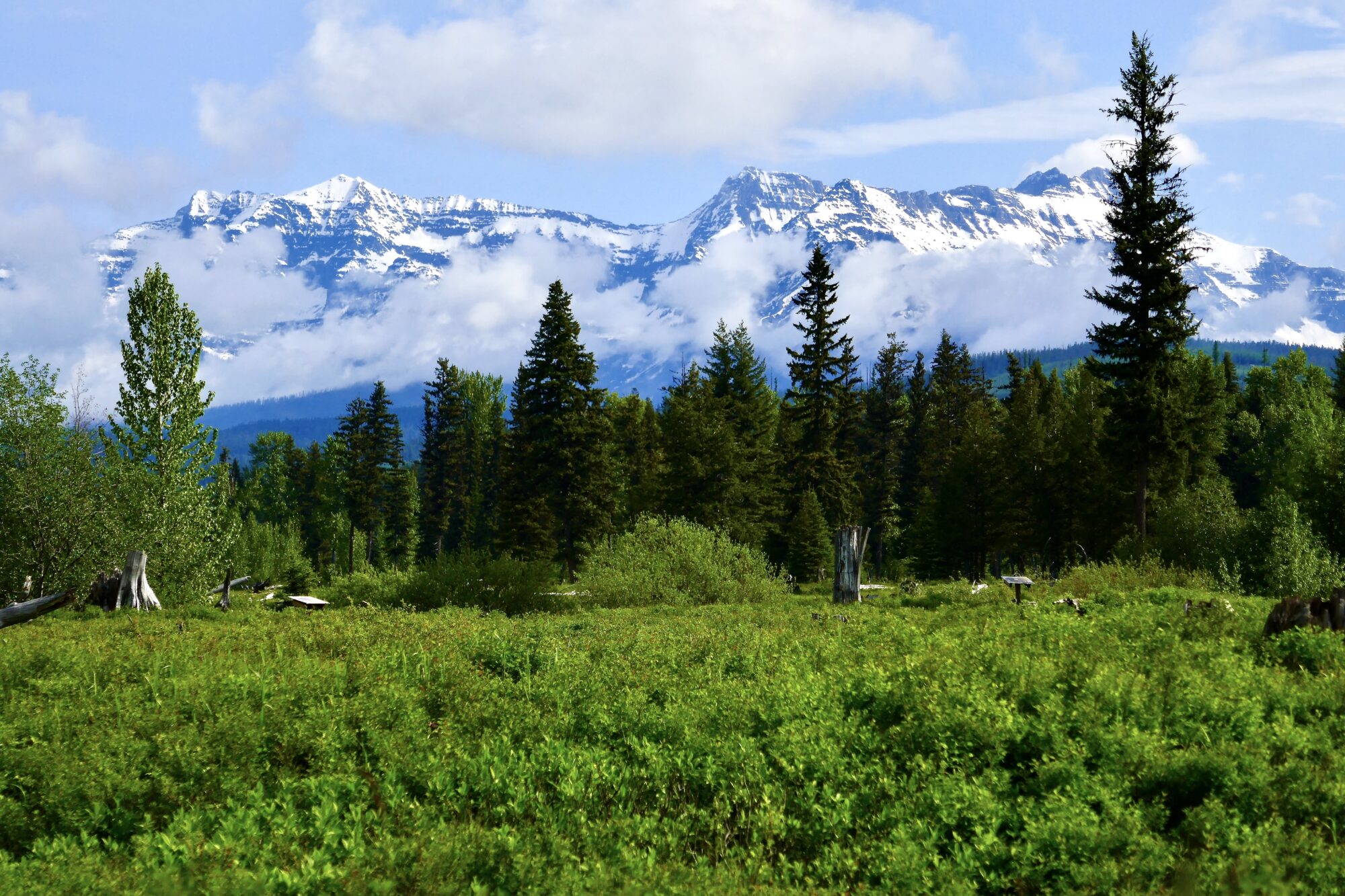
I had been sitting behind the fallen log at the edge of a high mountain meadow for a just a few minutes when the snow squall came. The small flakes swirled in the wind and the mountain peaks disappeared in the fog and clouds. Just then I caught movement to my right on the old pack trail coming up from the creek crossing. A big bull! 5×5! He strolled into the meadow, the snow melting and steaming on his back. He threw his head back and sniffed the wind, then blew, the steam flowing from his nostrils. He looked over his back, then crossed the meadow and disappeared into the black timber. A great experience in a grand place that few venture to whether from lack of desire or lack of ability to propel oneself deep into the wilderness.

For as long as I can remember I have wanted to hunt elk. I grew up with friends in North Idaho who seemed to always draw good tags, knew where to go and more importantly knew about elk and the country they called home. I satisfied myself getting to follow my dad around in the mountains and participate in what we called hunting. I was able to take a few grouse, saw some game and learned how to build a fire in all manner of conditions. And though my dad took my brother and I out nearly every time we asked, we never harvested big game. But the ember still glowed within. Someday I would hunt elk for real and someday I would actually take an elk on its terms, in its country. It would be something special.

Fast forward to about 2002. I had been looking at some new gear and inquired on the Kifaru forums, looking for some first hand field experience with the pack I was considering. A few days later I got a PM back from a guy on the forum and he said he would call me and discuss the gear he had and was using. I recognized the name right off as someone who was getting deep into the woods and had a wealth of backcountry experience. Sure enough a few days later I got a call. This fellow introduced himself as Allen and proceeded to lay out the goods and bads and his thoughts on making this gear better. He had packed in deep and brought out elk on his back with this gear. Wow! This guy is doing what I have been dreaming about for years. The conversation ended with some talk of hunting and my frustration with trying to figure out the wily wapiti on my own. Allen says, “I have a place where you can sit on a meadow at the end of the day and at 5:05pm the elk wander out of the timber and you fill your tag. I’d be happy to take you in sometime and see if we can get your elk.” Wow! This guy just met me, on the phone, and is offering to help me fill my elk tag. This could really be something.

That summer we went on a 3 day trip into some high lakes. We fly fished, sat by the fire and had some beers and got to know one another. Turns out we fit pretty well and we’ve been into some crazy steep and deep places, fished and hunted and shared a fire and tent for many nights since that fateful phone call in 2002.

During the those years Allen made a major career change and started his own company. My wife and I relocated twice and changed jobs. I hunted in Africa. Went to Kansas to hunt buffalo and took a few deer over the years. Then, in 2012, the stars aligned and we were headed to Allen’s place together for the first time. Allen’s friends Pat and Rich joined in this trip and we shouldered our packs and headed down the trail in a foot of new snow and howling winds. I immediately took note of the fact that we were losing elevation rapidly. Who hunts elk downhill from their truck and the trailhead? Thought two: this is a pretty steep trail.

We reached the camp site a few hours later and set about getting our Kifaru tipi and stove set up, cut a bunch of wood and got settled for the next few days. That night we were on the meadow I had heard so much about. The light was fading. 5:05pm came and went. No elk. OK, it’s only opening day. We have 4 more days if we need it.

The next day was spent getting really settled in and taking some short hikes downstream to sit on some known crossings the elk use regularly. We agreed to meet at camp at three p.m. and make our way back into the meadow for the evening. I sat on the northern most corner and could see the main trail coming into the meadow and a small crossing south of me. Allen and Rich moved up to the opposite corner at the edge of some heavy timber. I was settling in listening to the night sounds, occasionally hearing cow calls on the bench above. A light drizzle was starting and I scrunched further down into my silk scarf to ward off the chill. Then it happened, a single shot broke the wilderness silence. I was instantly on full alert for movement, sound, the tell-tale tan rumps in the timber. Nothing moved. All was silent. I looked at my watch: 5:07pm. Wow, there really is something to this place.

I rendezvoused with Allen and Rich on the other end and sure enough Allen had an elk down. We radioed Pat to meet us and help pack meat back to camp. By now the rain was pounding down as we skinned, boned and packed the meat for our trip to the tipi. This was really living for me. We had an elk down, a warm Kifaru stove, a gentle rain and good friends sharing a grand hunt.

Fast forward a year. This trip only Allen and I made elk camp. Suffice it to say I learned more about the country, and had up close encounters with cows and big bulls, but no spikes. We endured a night of pure terror as a series of mini-cyclones ripped up the canyon and dozens of big trees toppled in the pitch black night. We sat up most of that night with a few essentials ready to go in case we had to abandon our camp.

Those two years in the wilderness were awesome. I learned the meadows, the old pack trails, the creek crossings and endured some horrendous weather. But the third time, as they say, was the charm.

Home in the Wilderness

Opening night found Allen and I on the southwest corner of the meadow in a steady rain. 5:05pm and the first cows and calves moved into the meadow. A big 5×5 sauntered out and laid down not 75 yards from us. Then, as the light failed I saw what may have been a spike. But from my vantage his head and neck merged with the black timber behind him and I could not be absolutely certain it was a legal elk. I watched until my eyes watered. It seemed like hours, but really was only minutes when Allen’s little Kimber barked, the elk faltered and the small herd vanished from the meadow. It was, in fact, a legal spike and Allen had a sure view from his hide.
We spent the night skinning and boning and in a howling wind, pouring rain and again big timber crashing to the ground all around us. Nothing like a little hardship to sweeten the experience of an elk well earned.

Normally with an elk down the hunt is over in this little slice of heaven. However, this year we had friends with horses to help us out. Two elk was a possibility.

The next afternoon we made our way to a different meadow deeper in the canyon. As I got set up Allen made a long loop along the creek on the bench below to see if any elk were moving along the bottom. He had just made it to my sitting spot and was just getting set up when I saw legs coming through the timber down an unused pack trail. There was a little opening about 75 yards in front of me, maybe 30 yards wide. The elk stepped from the timber and I immediately whispered to Allen, “Spike!”

My meadow view

I laid the Tikka over the log and before the elk crossed the 30 yard opening sent the Nosler Partition on its way. The elk jumped and ran about 30 yards and collapsed in the meadow right in front of us. Holy Cow! All those years of trying to take an elk. A guy I didn’t know from Adam calling me on the phone and telling me he would help me. And now, 60 yards away lay my first elk. Allen jumped up and hugged me, a huge smile on his face. I don’t know who was happier, him or me. We grabbed our packs and walked to the elk. Allen spent time taking lots of pictures to capture this special milestone for me. The rain, wet hair, the elk smell, the antlers and one of my best friends made for a very special evening.

A dream realized!

We skinned and boned the elk and loaded all the meat into our packs for another night hike back to camp. We got the meat hung, stowed our gear and sat down to a well-deserved meal and celebratory cocktail.

The next day we cleaned gear, rested and made a hike up a ridge to call our horse-powered friends. It was a bittersweet call. Yes, they would pack our elk to the trailhead. No, they didn’t think they could take it all with only two horses. OK, work the phones. We contacted our good friend Kevin and my brother, Mike. They were good enough to drop everything the next day, hike eight miles in, grab a quick lunch and then head out loaded with meat. They literally saved our bacon!

Help arrives!

The next morning we broke camp and headed out not only with all our gear, but also a sizeable meat bag in our packs. The sad reality of it was we were packing more on our backs than our horsemen would carry on their pack stock. They limited each horse to only 100 pounds. It was slow going with 100+ pound packs. 8 miles, 4000 vertical feet, wind, drizzle and a muddy trail that looked more like a creek than a trail most of the time. We stopped to eat and drink frequently, both of us watching the other for signs of overexertion, hypothermia and fatigue. When we hit the big bench the fog settled in. Allen gave me his headlamp so we wouldn’t have to take off the packs. The last stretch of this trail drags forever, winding through big timber. It seems like the road is right beside the trail, yet it is another hour of hiking away. As I leaned into the pack straps, Allen slowly pulled away. I was alone with my thoughts and the little cone of light in front of me.

This is how hunting should be. Unplugged, far from the well traveled path. Deep in the wilderness on the elk’s terms, in their domain. Bad weather, a long trail, a pack full of the items needed to survive and pure organic protein of the animal harvested. A secure camp, best friends becoming better friends, laughing, succeeding and suffering together.

The pack belt had long ago rubbed my hip bones raw, my shoulders were aching and my legs were now just taking the steps with no conscious thought. Out of the darkness I hear, “I’m on the road, just a little farther. We made it!” Sure enough, a couple minutes later I join Allen on the road and we see the reflection of the taillights of his truck at the trailhead. It is bittersweet. The suffering of the long pack is over, but so is our hunt and our time together. On the flip side, we have had a great week, we harvested elk and we have a year’s worth of the finest eating meat available and we have next year’s hunt to look forward to.

The end result of a grand adventure

Loader Bucket Upgrade

The obvious use for a loader on your tractor is to move material from a seated position rather than with a shovel in your hands.  The loader can scoop, transfer, and dump all manner of material as well as do some minimal digging if you take your time.

But there is a secondary use for that loader, and that is lifting heavy stuff.  Maybe you need to move a filled fuel drum from your pickup into the shed.  Or perhaps you need to position some railroad ties for new fencing and get them ready to set squarely in the ground.  The loader on your tractor can save your back and save your time.

However, you’ll likely find that the owner’s manual that came with your tractor will instruct you not to lift with the bucket.  Only move gravel, dirt, compost or other scoopable  materials.  Lifting is inherently dangerous and should not be done.

But, you live on a farm and have heavy stuff to move.  You now have a tool in your possession that can make your life easier and allow you to accomplish more work in less time and with less people to help you.

If your tractor loader is like mine it did not come equipped with any way to secure a chain to the bucket to lift with.

You certainly do not want to just wrap chain around the bucket.  Without solid anchor points that chain can slip and cause your load to shift or fall.  You need solidly placed chain hooks to secure your load.

On a Sub-Compact or Compact Utility tractor you are likely dealing with a bucket that is made of 1/8″ thick material.  Like mine, you may have a square or round reinforcing bar welded inside the top edge to help prevent bending and add stiffness to the upper edge of the bucket.  If you are set up to weld you can easily add a couple chain hooks to your bucket with readily available weld-on hooks.  However, if you are like me, you are not set up for welding at home, yet.  Now what?  How do you safely add the attachment points you need if don’t have ready access to a welder and want to keep costs at a minimum?  The solution is simple:  Bolt On Hooks.

After some reading and researching various websites and blogs I decided this was an easy, cost-effective way for me to add hooks to my loader bucket.  The process for ordering was easy and 5 days later my hooks arrived in the mail.  All the hardware and detailed mounting instructions are included in a very well packaged box.

Below are the tools I used to install the hooks on my tractor.  I did have to grind just a bit off the big washers so they would sit flat against the bucket.  Remember that reinforcing bar on the top edge?  In order to properly locate the hooks and have full contact on the top of the bucket, the mounting holes were just a little too close to the reinforcing bar.  That said, 5 minutes with a pair of Vise Grips and the grinder and all was ready to assemble.

Ken, at Bolt On Hooks, recommends mounting the hooks in line with the lift arms on sub-compact and compact tractors as this is the strongest point of attachment.  I used blue painters tape to mark my location and the centers of the 1/2″ holes for the mounting bolts.

I used a nail to center punch my drilling locations then drilled a pilot hole with a small drill bit.  I lubricated the bit and metal with WD-40.  I then switched to step bit from Harbor Freight to drill the 1/2″ holes.  Having never used a step bit before I was a bit skeptical.  However, I will never be without step bits in my tool box again.  These bits drilled perfect holes in a matter of a couple of minutes for the entire project.  I highly recommend them.

Next, I used a round file to take off the burrs on the inside of the bucket and wiped off all the WD-40.  I did a quick test fit to ensure everything was properly placed.  Ken suggests putting a bead of silicone caulk around the edge of the hook plate to help keep any moisture from getting under the hooks and causing rust on the bucket.  I added the caulking then tightened up the bolts with a 3/4″ wrench and socket.  Installation complete.

I now have a safe and secure way attach my chains to my bucket to assist me in lifting heavy items.

For information regarding the strength of the Bolt Hooks and the hardware included please see the FAQ Page on the website.

The link below shows a video of how simple the installation is:

https://www.youtube.com/watch?v=EDQ2Bs3koJw


Make Mine a Yanmar

Owning a slice of the American Dream is a lot of work.  Whether you have two acres or 20 or even more, having the proper tools for the job makes country living not only feasible but enjoyable.

For many, owning land is a means to an end.  There is room for a garden, some chickens, maybe      larger livestock such as horses or cattle and perhaps a woodlot to harvest your own firewood to warm the house on those long winter nights.  But with the opportunity to become more self-sufficient, comes work.  The garden needs tilled or more top soil is needed for the raised beds.  The pasture land needs mowed, seeded and fertilized.  The stalls need cleaning and the compost needs to be turned and eventually loaded up in someone’s truck so they can add organic nutrients to their gardens.  And, if you live where the winter comes early and stays long, you have a driveway to plow and keep clear for yourself and maybe your neighbors.

Enter the farmers helper, a tractor.  With a proper tractor you can accomplish more, in less time, and with less potential for strains and injury on your body.  For us, our first venture into land ownership and having four acres of pasture and a long driveway began 15 years ago.  The first year I managed to keep up with things, sort of, with a riding mower and a small trailer.  The next year I purchased a 1962 International B414 tractor.  I paid $1000 for the old orchard hand with a 5-foot Bush Hog mower, a spring-tooth harrow and a nearly worthless back blade.  A good gas tank cleaning, a new fuel pump and an oil change and I was officially a farmer!

1962 B414

The old tractor is still with us after four relocations and two winters of record setting snow fall in Deer Park, WA.  It has a few hydraulic leaks, looks about like it did when I bought it and still starts on the first crank.  But, this year, with heavy snow and cold temperatures that kept the Yakima Valley white for months we decided that a tractor with a loader and preferably four wheel-drive was now a priority.  We just didn’t have any place to pile more snow this winter with the ATV.  A loader to pick up and move snow would have been a blessing.

2017 Snow Pile

Then spring came.  What happens to all that snow when the temperature goes up and the rains come to the foothills?  It all turns to water with no place to go.  Enter the Flood of 2017.

The driveway & neighbor’s overflow ditch

Within a few hours on the night of March 15 our little creek went from high to out of control.  In the early morning hours there was as much as 8″ of water coming down the drive.  Fortunately, our neighbor had an emergency overflow ditch dug after a similar issue in the spring of 2016.  However, this year the water came down the road and into our front yard in a matter of minutes.

Again, thankfully, our neighbor was prepared.  He had purchased a Kubota tractor with a loader last year.  We were able to build a dam in a matter of minutes to slow the flow of water into our yard and protect our home.  Justification number 2 for having a loader at our disposal!

I had been researching tractors, loaders and brands for several weeks when the flood hit.  The night we built the dam I spent my time between checking the ditch and the yard learning everything I could about compact tractors with loaders.    Of course Craig’s List was my first stop.  I found quite a few tractors for sale in and around central Washington.  However, I was finding a lot of what I would call glorified riding mowers with small loaders.  These were tractors with anywhere from 18HP to 24HP at the engine.  Meaning that the PTO horsepower would be somewhat lower.  As my research deepened and my knowledge increased, I determined a 30-35HP tractor would be a better long-term investment.  It would allow ample power for our current property and allow us to have a powerful tool for our ultimate dream of a nice piece of timbered land in North Idaho.

The Craig’s List ads almost always had a some photos of nice tractors that had loaders, were in the 27-35HP range and fit my budget.  The ones that really caught my eye were a couple of Yanmar diesels from a dealer in Thorp, WA called TractorCo.com.  TractorCo.com has been in business has been in business for over 20 years and was an early adapter to utilizing the power of the internet to advertise and sell used tractors all over the Pacific Northwest.

The tractors that TractorCo.com sells are all used diesel imports.  Many times these tractors are called “gray-market tractors”.  Quite simply these are tractors that were made for another market, typically the Asian market, and are legally imported to the US for resale by various dealers.  The tractors are used, reconditioned and upgraded with various US safety gear then sold on the used market.  Many of the tractors have very few hours on them and are upgraded with a new front loader.  This coupled with a durable Yanmar diesel engine and their reliable Power Shift transmission makes loader work a breeze.

Other upgrades and enhancements include ROPS (Roll-Over Protection System), new seats, seat belts, emergency flashers and PTO shaft shields.  The tractors have new fluids and filters, and in the case of all the tractors we saw at TractorCo.com very good or new body-work and fenders and paint.  There is a new battery installed and the tractors all start quickly and function correctly.  The tractor we eventually chose was a Yanmar 3110D with 883 hours on the meter.

Of course, as with all used equipment, it is buyer beware.  We had the good fortune to speak with Buck, the mechanic at TractorCo.com and he gave us a full run-down of the features, operation and the goods and bads of the tractor we chose.  I also read nearly every Tech Article at the Hoye Tractor website to learn about the various Yanmar models and the specs.  Hoye Tractor also carries a full inventory of new and used parts for imported Yanmar tractors.  They are a wealth of information when trying to decide if a used import is right for you.  I highly recommend ordering the Operation Manual for the tractor you choose so you know exactly what all the levers do and how to safely operate your tractor.  Also included in the manual is detailed service information and specs on fluids that you need to be sure your tractor lasts for many years.

Upgrades that we will make to this tractor include the following:  bolt on hooks on the bucket from boltonhooks.com, two pairs of LED work lights mounted on the ROPS; one forward, one rear for night-time work, a new gas cap with functional fuel gage and a new ignition switch and keys.  Again, this is a used tractor.  While it is a major upgrade from the old International, it is an early 1980’s vintage and is not perfect.  However, with some care, maintenance and a few minor upgrades it should provide us with the mechanical advantage we need to complete our work around the farm safely and efficiently.

Next time we’ll take a look at a couple of the updates and see the tractor in action around the farm.